



THE HISTORY
The Pink Triangle, Paragraph 175,
and persecution under Nazism.
Sexual Liberation in Post-WWI Germany
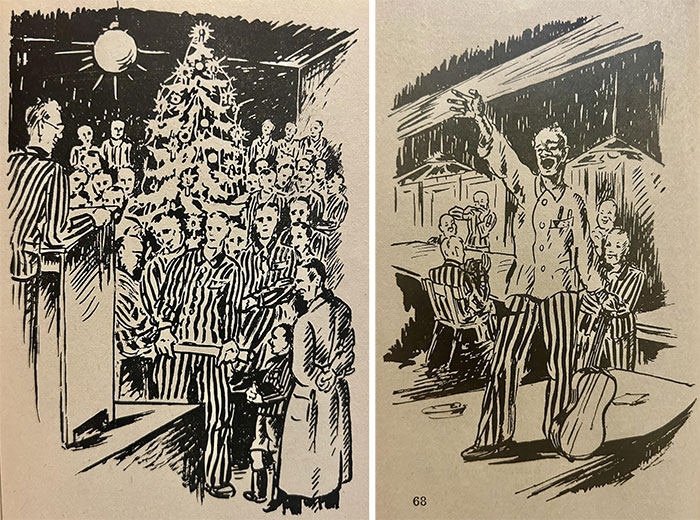
The Weimar Republic was the period between WWI and 1933, when the Nazis seized power. During this time, Germany, and especially Berlin, was the gay capital of the world, having over 100 gay bars, clubs, restaurants, and dozens of publications and magazines. You could find spaces that catered to lesbians, gay men, artists and musicians, drag queens, anyone. Arrests for being gay were rare, especially in cities. Dr. Magnus Hirschfeld ran the Institute for Sexual Sciences, where queer people could receive health care, trans people could get gender affirming care and even a transvestitenschein (passes that prevented the police from harassing non gender conforming people) and it was home to the world’s largest scientific library on queer studies. The Nazi’s first book burning was the destruction of this institute in 1933.
Paragraph 175 & 175a
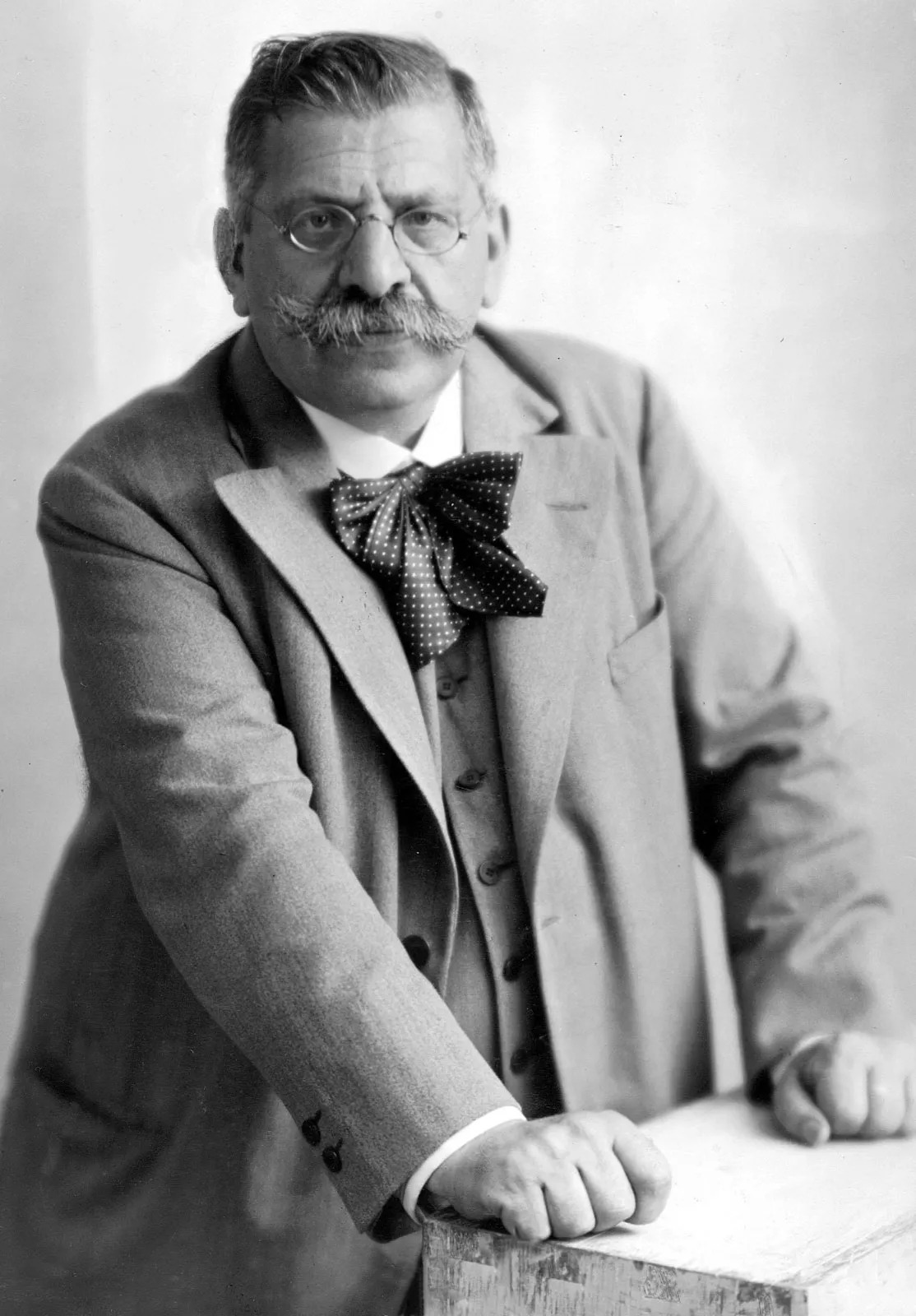
Paragraph 175 was the anti gay sodomy law adopted by Germany in 1871. It was very nearly repealed in 1929 due to the tireless efforts over decades by Dr. Hirschfeld. In 1935 the Nazis strengthened paragraph 175, making it much easier to arrest gay people. Almost any same sex affection could be prosecuted under this law, from holding hands, to hugging, to having looks that lasted too long. This Nazi law stayed on the books in West Germany after the war, even when all other Nazi policies were abolished.
The Pink Triangle
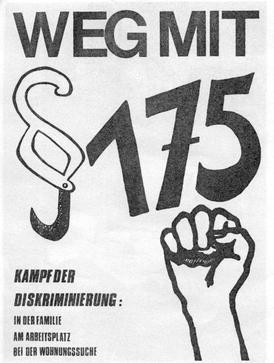
It started as a Nazi symbol for queer men to wear in prisons and concentration camps and was for a long time seen as a symbol of shame. That started to change in the 70s as gay liberation activists were looking for symbols to express their desire for freedom and legal recognition. Pretty soon it became one of the most well known symbols of gay pride.
In the 80s it became very well known because of the silence=death campaign to raise awareness about AIDS. They accidentally put the triangle upside down, not knowing that it was worn the other way around originally.
Treatment in Concentration Camps and Prisons
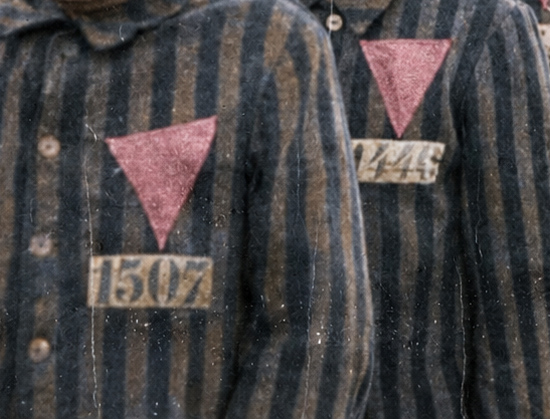
The queer capital of the world came crumbling down once the Third Reich began. Arrests under Paragraph 175 spiked, and in the mid 30’s queer people were some of the very first people sent to concentration camps, as well as political dissidents.
While lesbians were not also directly targeted in the same way, they were considered morally reprehensible by not adding to the German birthrate and many were arrested and sent to camps as well, usually labelled as “asocial.” Their entire social world and culture was destroyed, and in Austria, the anti-gay law called paragraph 129 also applied to queer women.
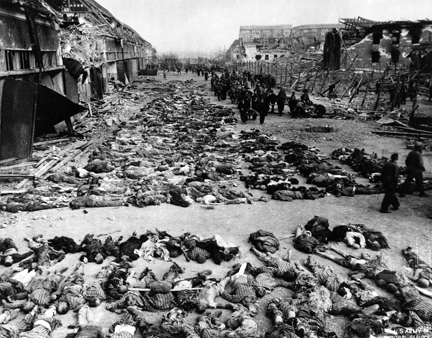
Some of the most sadistic and terrible treatments were reserved for gay prisoners in concentration camps. Torture, mutilation, medical experimentation, and castration were common. They could be fed to German shepherds, strung up on poles like a crucifixion, being used for target practice, and sexual abuse by guards and Kapos was prevalent.
When death certificates were sent to families, they usually had the lie of heart failure as cause of death as there was a determined effort to hide what was happening in the camps.
Who Were They?
Many cities in Germany created anti-gay task forces that hunted down queer people and their networks of friends. The world’s most gay-friendly country had turned into a fascist nightmare.
Gender non-conforming and trans people would still be charged with crimes, such as “disturbing the peace”
Lesbians could be charged as asocial. Paragraph 129 in Austria was an anti-gay law that was also used to arrest queer women. A simple denunciation by a neighbor was all it took for many queer women to be investigated and arrested.
100,000 queer men were arrested during the Nazi era. 50,000 of them were imprisoned. A huge number of these arrests were made because of denunciations from the public. Inspired by Nazi rhetoric that demonized queer people as a danger to society, people turned in family members, co-workers, friends, neighbors, tenants, and employees at massive rates.
About 15,000 were sent to concentration camps, where they had the highest death rate of any group besides Jewish people. Gay prisoners were isolated in their own barracks and considered the lowest rung of all prisoner classes. Conditions were dehumanizing and radically altered the appearance of many men, to the point that previous friends and lovers often didn’t recognize each other anymore.
In 1942 there was a concerted effort to exterminate gay people in the camps.
Nazis had a primitive understanding of sexuality, and thought being queer was contagious, and that gay people could be changed through force. Much like Christian conversion therapy in some places today, they used psychological torture, as well as physical torture.
I’d also like to address a common misconception that is still sometimes repeated; that there were many gay Nazis and thus no persecution happened. While there are a few isolated cases, the truth is that Heinrich Himmler was fervently homophobic, and he ordered that any man charged with being gay in the SS/police/ or Gestapo be executed. While there was a single gay general at the start of the Nazi reign, Ernst Rohm, he was quickly disavowed and murdered during the Night of the Long Knives. Hitler then publicly announced at this time that gays were degenerate, un-German perverts who threatened the master race.
Liberation was for Others
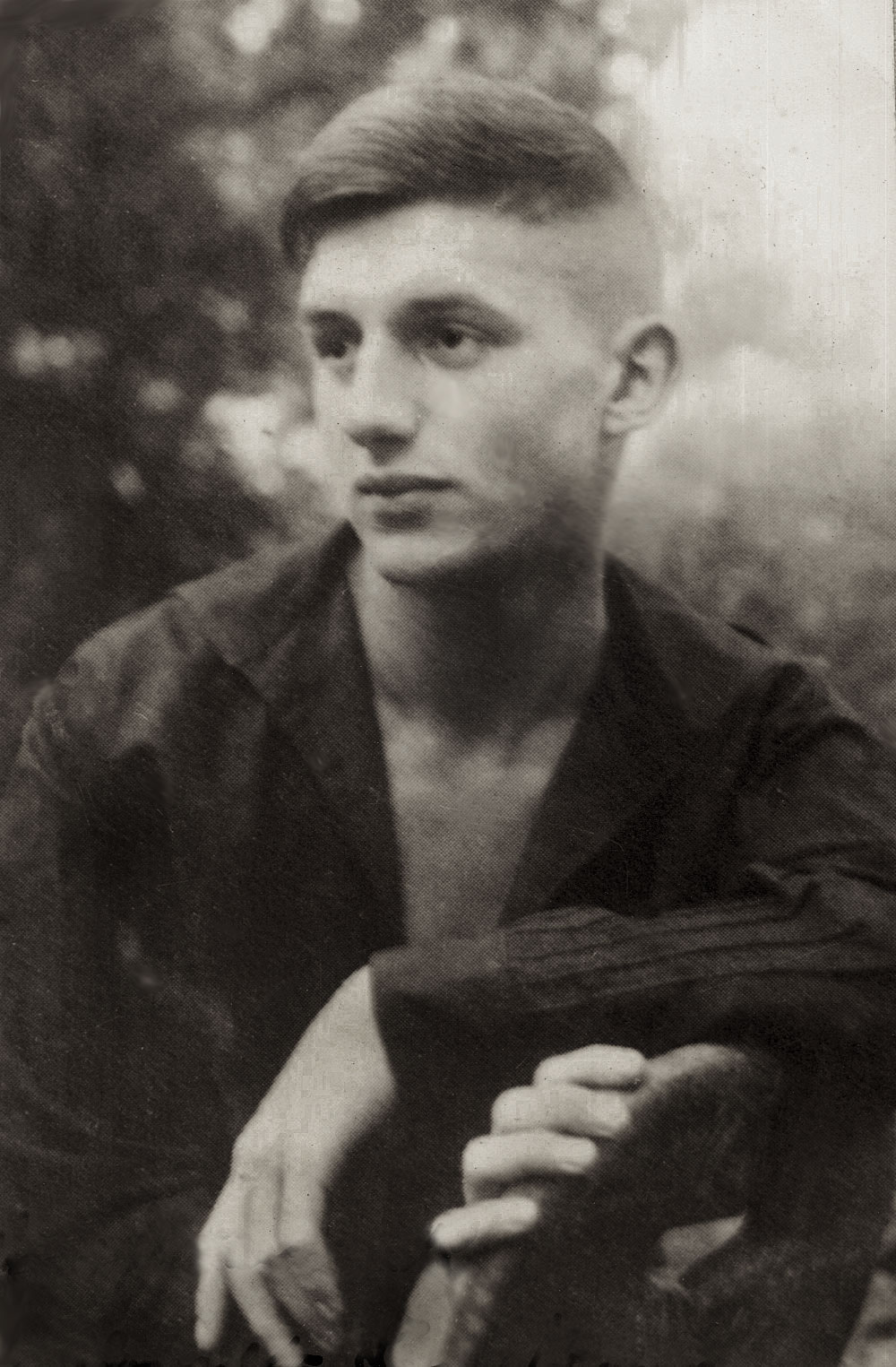
When the allies freed the camps, gay prisoners were re-imprisoned to finish their sentences. Imagine the world crushing despair of surviving a concentration camp, and to finally have the allies save you, only to throw you in another prison. Gay people were not considered victims by most, merely criminals justifiably imprisoned. This drove survivors to hide their experiences in shame.
When the brave few survivors that did speak out and demand reparations, their experiences were denied and officials refused to publicly acknowledge what happened to them. The history was denied widely until the 1970s.
Heinz Fleischer, for example, was not freed by the allies, and then re-sentenced by the same Nazi judge who put him in the concentration camp in the first place.
Using Art in the Culture of Remembrance
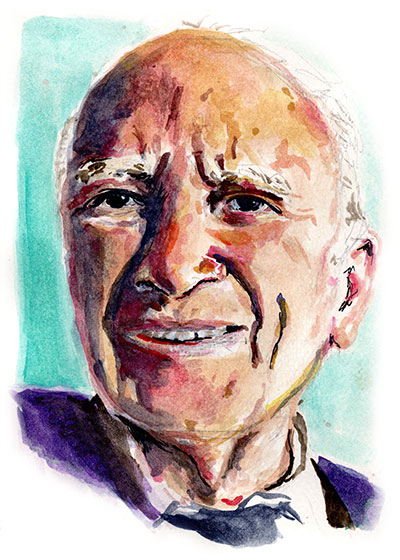
While I try to continue the legacy of queer victims and survivors through artwork, I am certainly not the first to use art in the culture of remembrance. Some of the very first queer testimonies of the holocaust were created in 1946 by artists Richard Grune and Hugo Walleitner.
As I sought to bring back queer joy into their stories of these lives, I found inspiration in the art these two created. Between images of abject horror, we have some like this, showing Christmas and other celebrations among the prisoners. Little joys showed through in camp concerts and the support prink triangle prisoners gave to each other, as other prisoners did not offer their compassion or empathy in most cases.